
Cataloged Moses Lake Directory Runs
Moses Lake city directory research begins with a distributed set of cataloged holdings, not one complete local run. Verified listings include digitized 1957 and 1959 volumes, a 1965 R. L. Polk directory, Polk titles cataloged for 1990 and 1992, and telephone or business directories from 1963 through 2002. The institutions holding or cataloging these items differ, and access can range from an online image to a library visit or an account-based catalog. Confirm the exact volume, page access, and borrowing rules before making a trip.
| Cataloged source | Years represented | Where identified | Practical access |
|---|---|---|---|
| Moses Lake directory images | 1957 and 1959 | Commercial genealogy catalog | Cataloged online; account terms may apply |
| R. L. Polk city directory | 1965 | FamilySearch catalog | Check catalog image and affiliate-library limits |
| Polk city directories | 1990 and 1992 | Stillaguamish library catalog | Verify onsite or lending access |
| Telephone and business directories | 1963 through 2002, with gaps | University of Idaho inventory | Contact holding library for individual years |
| Newspaper microfilm companions | 1941 through 2015 locally | NCW Libraries, Moses Lake | In person on branch reader |
The catalog evidence does not establish a first published year or a final printed year. It also does not prove that each year in a date span survives. Treat each listing as a lead and ask the holding institution to verify the issue. For material at the local branch, call ahead rather than assuming a city directory shelf exists.
Moses Lake Library Research Desk
The Moses Lake Public Library at 418 E 5th Avenue is the practical local starting point. It has public computers, scanning and copying tools, and a microfilm reader. Its published branch page does not list directory years, old telephone books, an obituary index, or a reverse-directory run. Ask staff to check the NCW catalog and local-history files by title and year. That direct check prevents a long search for a volume held elsewhere.
Library-card users can also open HeritageQuest for census schedules, local histories, maps, and surname directories. Those sources help test an address or family link found in a city directory. The local branch phone is 509-765-3489. A reader can scan relevant pages, but should also capture the title page and abbreviation key so each entry remains tied to the right edition.
Note: Ask for a title-and-year check before visiting because the verified Moses Lake directory holdings are spread among several institutions.
Reading Moses Lake Directory Entries
A city directory entry compresses several facts into one line. A typical volume may arrange residents by surname and list a spouse, work role, business, telephone number, and street address. Some editions also carry an address-order section. The precise abbreviations and owner or renter symbols vary by publisher and year. No actual Moses Lake entry image or full key was verified in the research, so do not decode a mark from memory. Read the key printed in that same volume.
| Surname and given name | The indexed person; spelling and initials may change between issues. |
|---|---|
| Spouse or household note | A relationship clue that should be checked against another record. |
| Occupation or firm | A dated work or business link, not proof of current status. |
| Street and telephone | The listing attached to that edition; it may be a home, business, or shared line. |
| Publisher's marks | Symbols defined by the edition's own abbreviation key. |
- Criss-cross directory
- A directory arranged by street address or telephone number instead of surname.
- Householder index
- An address-order list naming the person associated with a household entry.
- Abbreviation key
- The publisher's legend for shortened terms and symbols used in that edition.
Photograph the key first. Then save the entry, page number, year, publisher, and any street section that confirms the same address. This small habit keeps a short line from losing its context.
Neppel in Moses Lake Directories
Early local searches need more than the modern place name. Moses Lake's predecessor, Neppel, formed around 1910 and was platted in 1911. The city incorporated under the Moses Lake name in 1938. No verified Neppel-era city directory was located, but the old name remains vital when searching plats, newspapers, census descriptions, and regional catalogs. A zero result for “Moses Lake” may simply mean the record was filed under Neppel, a rural precinct, or Grant County.
The record geography also changes before Grant County was created in 1909. Earlier material may sit with Douglas County or a territorial record group. Search both place names and keep township, precinct, road, and legal-description terms from any matching record. Those terms can bridge a missing directory year.
| 1909 | Grant County was created from Douglas County, with Ephrata as county seat. |
|---|---|
| 1911 | Neppel was platted; early records may use that community name. |
| 1938 | Moses Lake incorporated, shifting later civic and directory wording. |
| 1942 | The Army Air Base brought a major migration and newspaper trail. |
| 1957 onward | Verified catalog evidence begins for Moses Lake directory images and later runs. |
Trace Moses Lake Directory Households
City directories work best as a chain of dated observations. Begin with a year in which the person was likely in Moses Lake, then move forward and backward through the nearest available issues. Record spelling, initials, spouse, occupation, telephone number, and street exactly as printed. The irregular local run means a gap cannot be treated as evidence that someone left town.
- Find the surname in one verified issue and save the complete citation.
- Check nearby issues for spelling, spouse, work, phone, and address changes.
- Use an address-order section if present to inspect the same home and nearby listings.
- Pair the directory snapshot with a federal census year or historical marriage index.
- Use newspaper microfilm to explain gaps, moves, deaths, marriages, or business changes.
The 1910 Grant County census collection has an index and images for 8,998 records. Later released census schedules can help bridge household ties, although enumeration may use Neppel, a precinct, township, or rural description rather than today's city line. One name and one address are not enough when several residents share a surname.
Moses Lake Newspapers Bridge Gaps
The strongest local substitute for missing city directories is newspaper microfilm. NCW Libraries lists the Columbia Basin Herald from July 1941 through July 2015 at the Moses Lake branch. The Grant County Journal run from 1907 through 2013 is held at Ephrata. Legal notices, obituaries, marriages, school items, club reports, property notices, and business advertisements can connect a directory entry to a date.
Search the surname with its street, spouse, employer, subdivision, or organization. An occupation in an old entry may point to irrigation, orchards, railroads, the air base, food processing, schools, or local service work. That is a search lead, not identity proof. Compare the newspaper item with the directory year and a second official or archival record.
The 1937 Moses Lake Inn fire and the establishment of the Army Air Base in 1942 shaped the local paper trail. They can explain sudden new occupations, businesses, and household arrivals. No courthouse disaster was found, so gaps should never be blamed on an undocumented records loss.
Marriage Indexes Confirm Directory Names
The Grant County marriage collection provides a strong cross-check when a spouse appears, disappears, or changes surname between issues. Its title reports 23,854 indexed records, with returns covering 1909 through 1935 and certificates through 2003. The search accepts names for each party, a marriage-year range, and Soundex, which groups surnames that sound alike.
Use the event county and date to separate people with similar names. For post-1968 marriage or divorce certificates, the Washington Department of Health is the state route. Older county marriage copies route through the Grant County Auditor. A certificate is stronger evidence than a directory line because it comes from the event record, yet it still does not prove where either person lived after the event.
Note: Soundex can uncover a spelling variant, but the date, spouse, and county must still agree before two entries are joined.
Moses Lake Directory Sources Beyond Town
Local history work often moves between Moses Lake, Ephrata, and Ellensburg. The Grant County Historical Society Museum and Village in Ephrata preserves and exhibits county history. Washington State Archives Central Region in Ellensburg holds Grant County local-government and marriage material. FamilySearch catalogs probate, naturalization, marriage, school-census, and directory titles, though image access can differ by item.
The official museum page is a useful preview of the county-history collection:
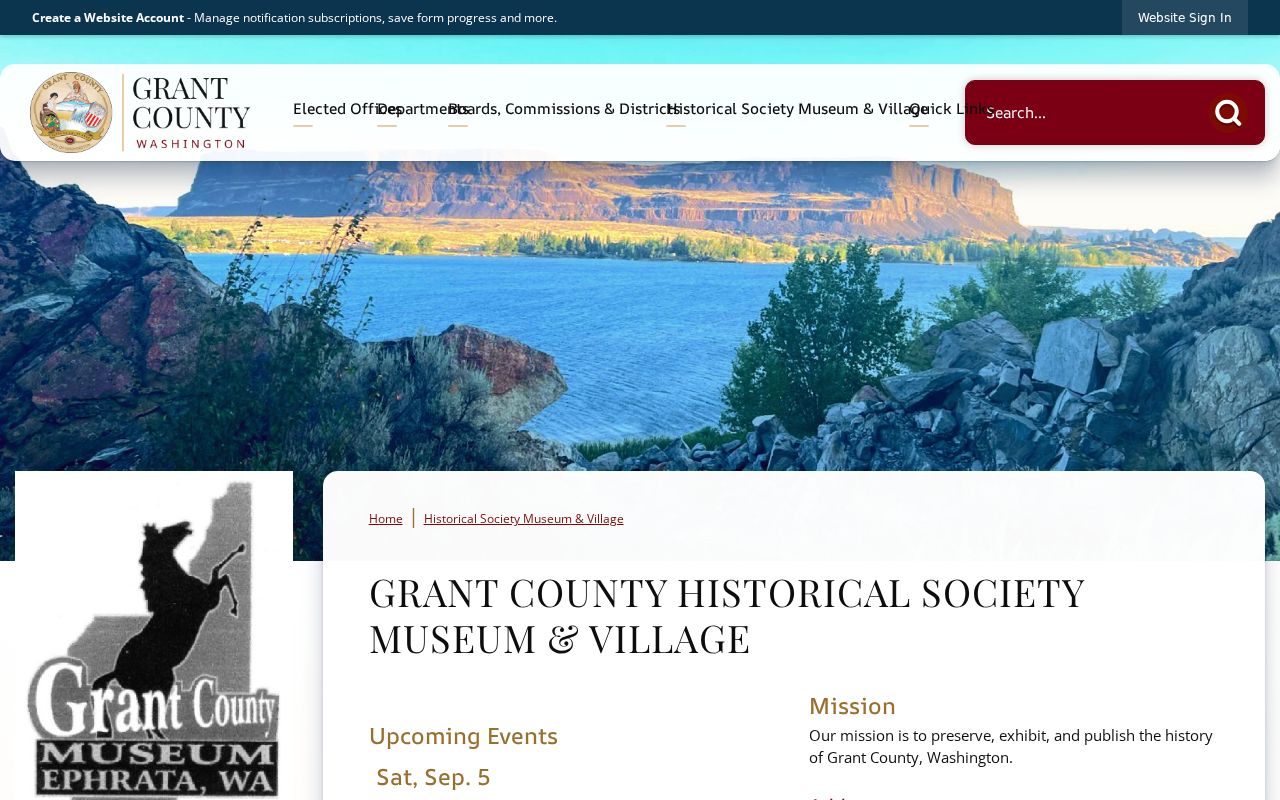
The museum is a contact point for photographs, maps, plat books, business records, school material, and family papers, but its searchable catalog procedure was not published. Send a focused question with a surname, place, and date range.
A second catalog view documents a route into distributed directory holdings:
The catalog entry is a lead to a specific title, not proof that every image can be viewed from home. Check the item record and any affiliate-library restriction before relying on it.
Moses Lake Directories and Classmates
A former-classmate search can combine public historical sources without exposing a private current address. Start with a yearbook or school-census entry, then compare the name with a nearby city directory, the census, and Columbia Basin Herald microfilm. Moses Lake High School yearbooks appear in established genealogy catalogs, but a verified year-by-year local run was not found. Ask the library to confirm the exact title and class year.
Compound surnames, initials, and diacritics deserve separate searches. NCW Libraries notes Spanish-language service, which can help when a catalog or old index strips accents. A school roster shows attendance at a point in time. It does not establish current residence. If a historical directory find needs a modern official cross-check, use the Moses Lake resident search workflow and keep the inquiry personal, lawful, and respectful.